Last Updated on May 5, 2026
Blusteak transformed a legacy offline brand into a 2.5X ROAS D2C E-commerce Store in just 3.5 months
Industry: Food Ingredients FMCG brand
Service Focus: Performance Marketing
Client Overview
- Legacy food brand rooted in traditional Indian (Kerala) cuisine
- Strong offline presence with trusted, household recognition
- Product range includes rice, spice powders, masalas, breakfast mixes, and flours
- Focus on natural, preservative-free ingredients and home-style cooking
- Positioned around purity, authenticity, and everyday family consumption
The Problem
A well-established offline food brand entered D2C with strong product credibility in the regional market —but as a newly launched website, the priority was to build the right foundation, create winning strategies, generate early sales, and identify scalable customer segments.
Key launch-stage challenges included:
- The entire product catalog operated at low AOV, making unit economics difficult to sustain
- High shipping cost pressure, especially for heavy products like staples
- Limited brand awareness outside its core regional market, restricting pan-India scale despite strong local presence
- Industry-standard 10–20% return rates are common in FMCG categories
Despite strong offline trust, the business needed a conversion-optimized and scalable D2C foundation from day one.
Strategy / Intervention
- The focus during launch was to build a high-efficiency conversion system across creatives, funnel, and on-site experience.
1.Deep CRO & Conversion Experience Optimization
Instead of relying only on ads, the focus was on improving on-site conversion drivers.
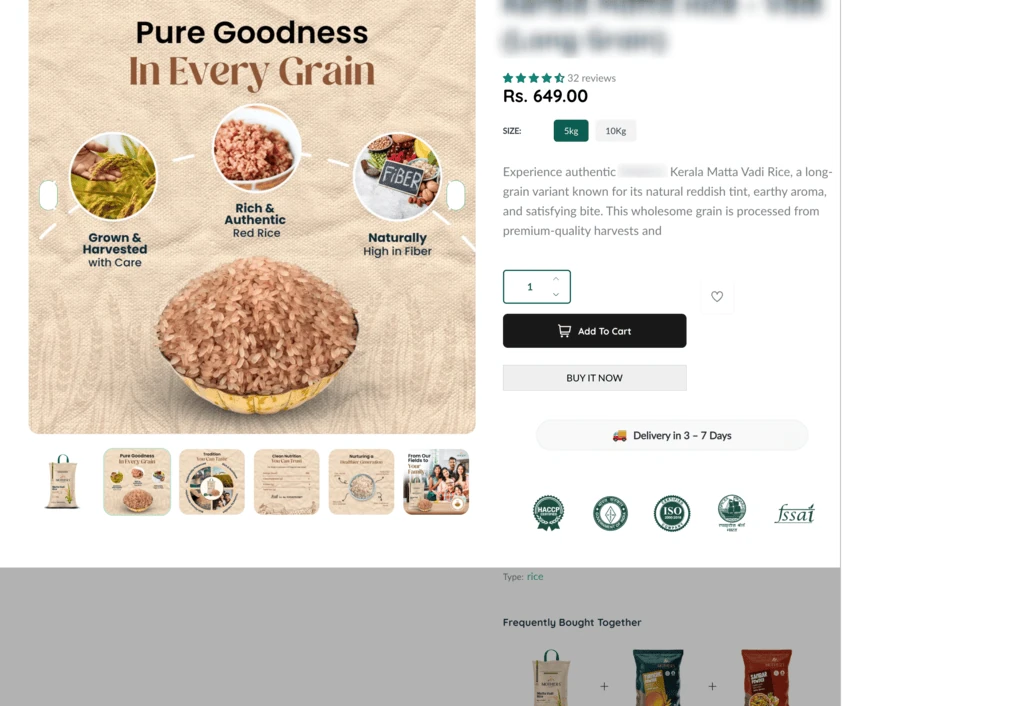
1. Product Page Optimization
Added image carousels + enhanced visual sections to clearly communicate:
- Product differentiation
- Key benefits & USP
- Brand trust signals
- Added Reviews & ratings (stars + text)
2. Smart Discovery & Navigation
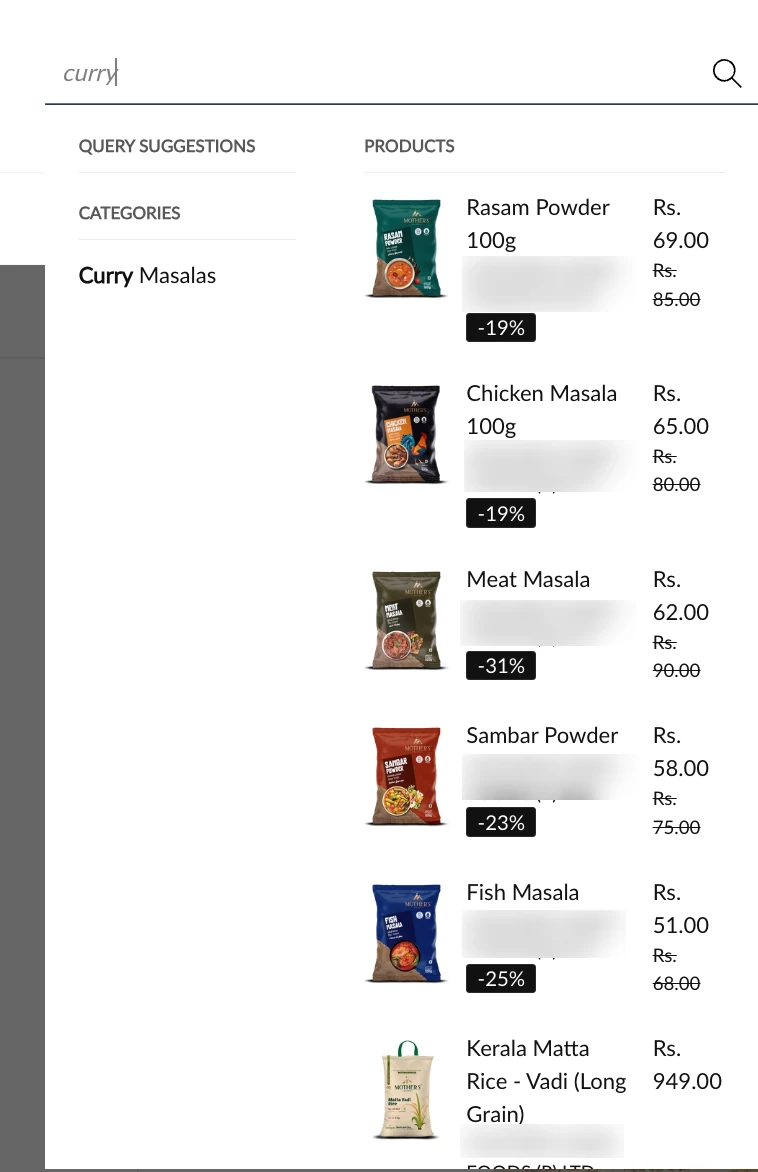
- Enabled smart search with auto-suggestions (product name, image, price)
- Improved product discoverability and reduced drop-offs
3. Basket Expansion Mechanics
Introduced:
Frequently Bought Together recommendations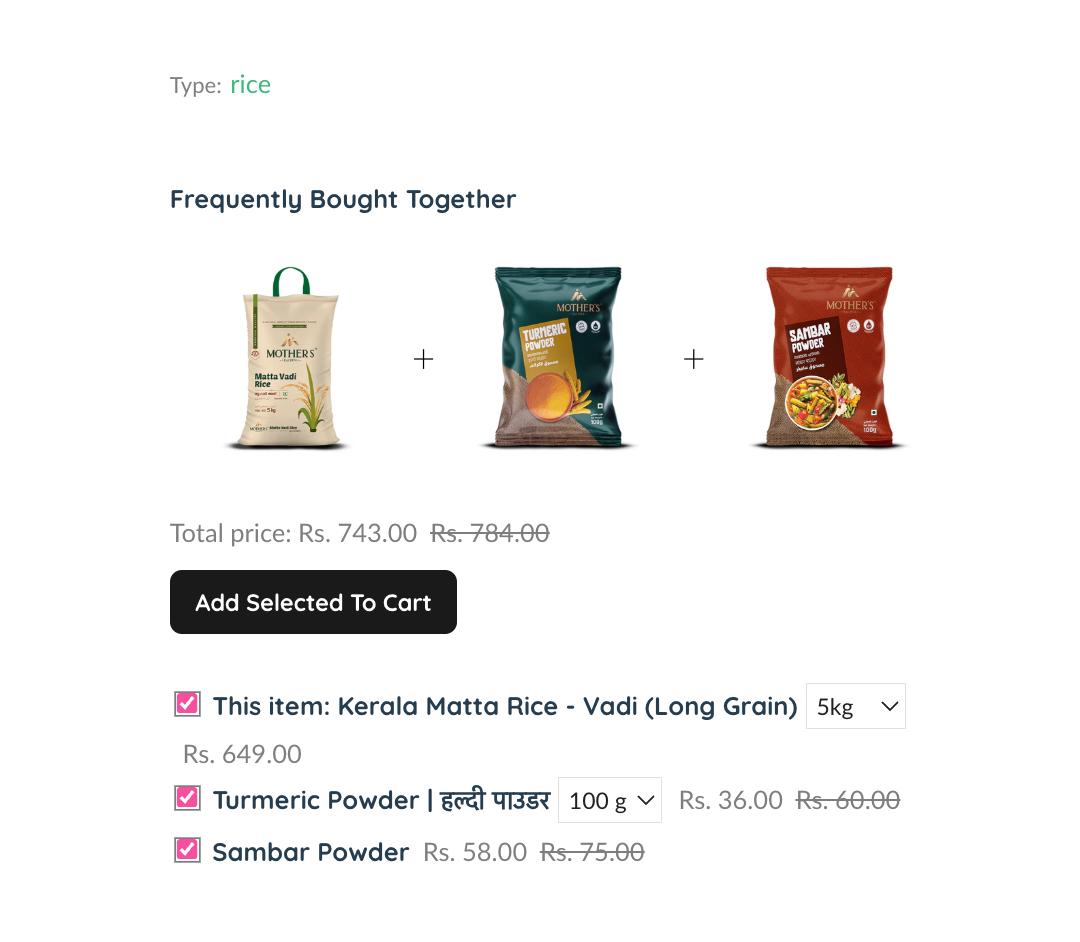
- Blusteak implemented Frequently Bought Together recommendations in the E-commerce store
- Complementary product suggestions
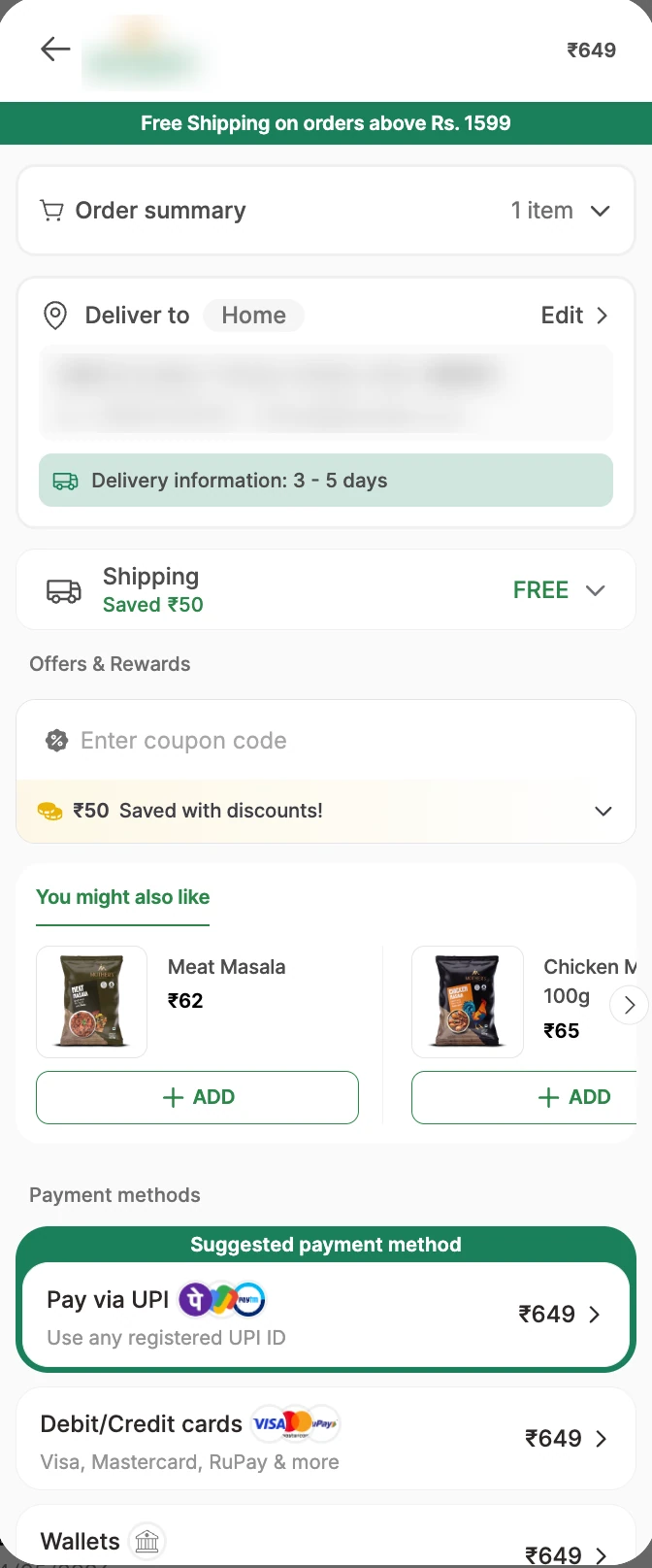
Blusteak implemented Complementary product suggestions in the E-commerce store
4. Cart-Level Conversion Optimization
Displayed:
- Savings
- Discount visibility
- Offer messaging
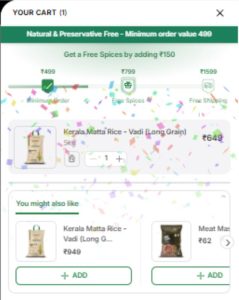
Implemented progress-based nudges:
Add ₹XXX more to unlock checkout / delivery benefits
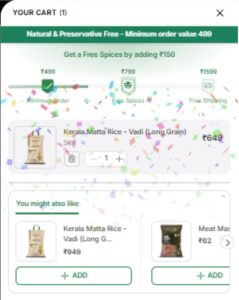
Blusteak implemented Implemented progress-based nudges
2. Improved AOV through
- Created bundled product packs (breakfast combos,daily essentials)
- Set a minimum order value (₹500)
3. Preventive Return Control
- Acknowledging 10–20% return rates in the category, implemented a prepaid-first approach
- Focused on high-intent buyers and operational efficiency
4. UGC-Led Creative Foundation
Introduced UGC-style creatives with clear value proposition
A/B tested:
- Video vs static creatives with different messagings
- Regional vs English messaging
5. Category-Led Scaling
- Identified high-performing staple categories early
- Focused scale on validated SKUs and bundles
The Result (Launch Phase)
Starting Point
- No established D2C conversion system
- Inefficient order mix and low basket size
Within the First Few Months
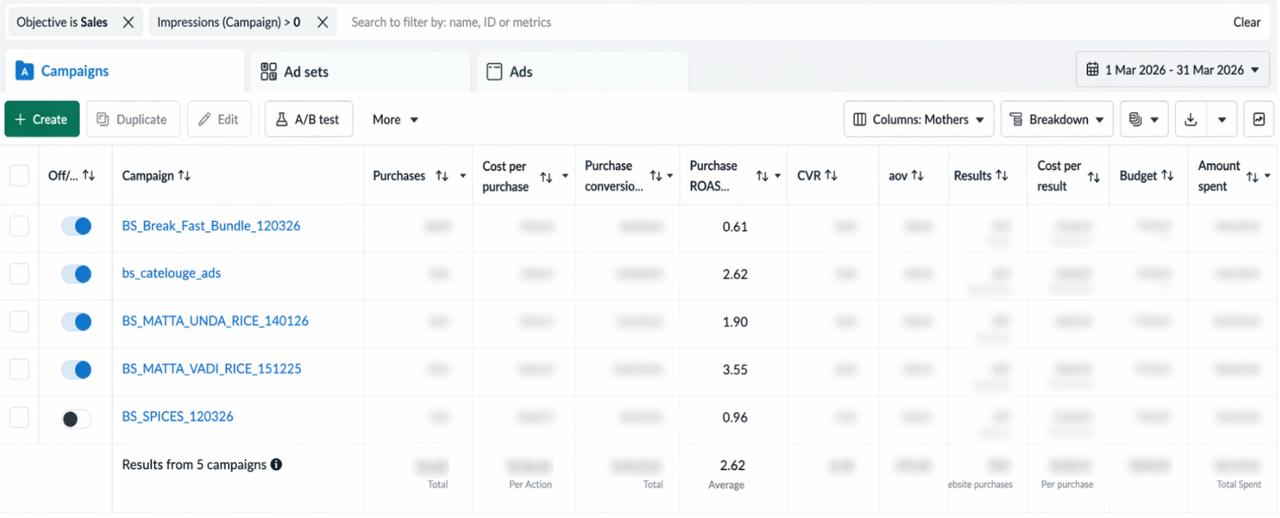
- ROAS scaled to ~2.5+ with consistent improvement
Roas from the Meta dashboard of December
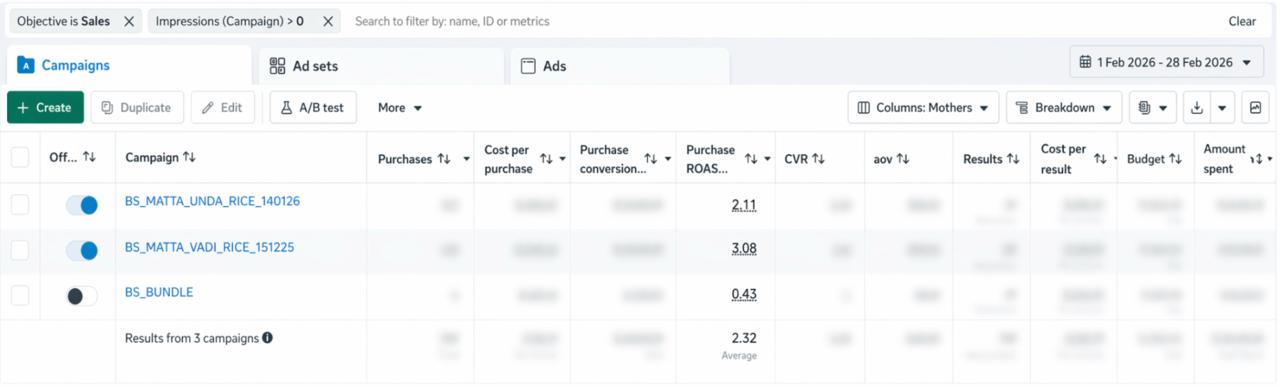
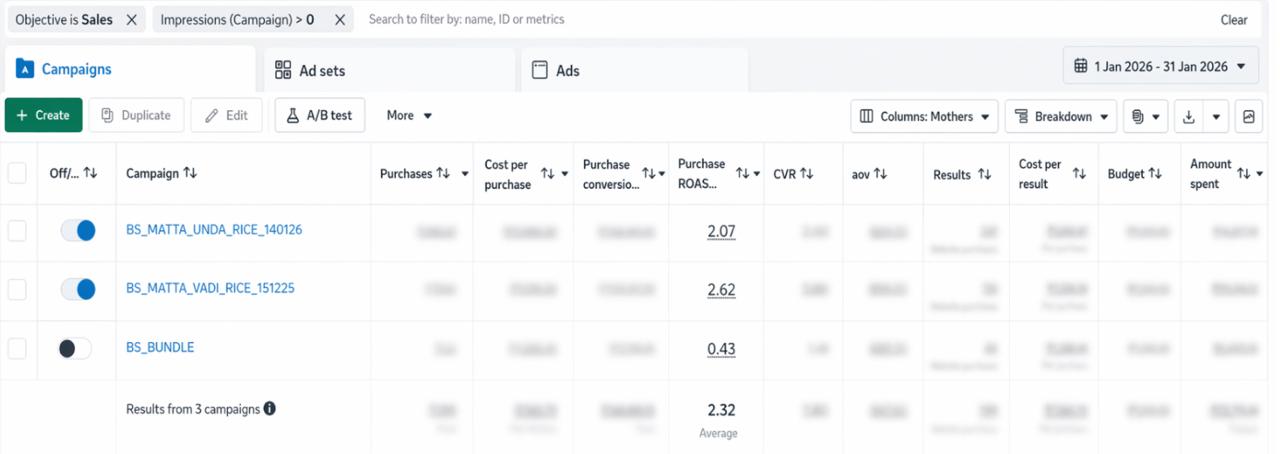
Roas from Meta dashboard of February
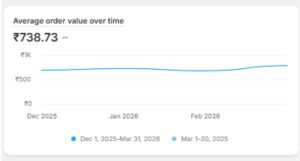
- Achieved AOV of 738 driven by bundles and cart optimization
Conclusion
Successful D2C launches are not driven by ads alone—they are built on conversion systems.
By combining:
- UGC (trust)
- CRO (conversion)
- Bundling + MOV (profitability)
The brand transformed its D2C channel into a high-efficiency growth engine from launch itself.