Last Updated on July 18, 2026
Blucampus, formerly known as Blusteak Academy, was built to train students in performance marketing through an offline bootcamp in Kottayam.
Before this batch, we knew the product was strong. But the category was crowded, the word ‘Academy‘ had become generic, and simply saying we were agency-backed was not enough anymore. Many other institutes were already using similar claims.
The real shift happened when we studied our previous students, understood why they chose us, and rebuilt the full admission journey around a sharper positioning: a Blusteak-backed, hyper-focused performance marketing bootcamp with only 20 seats per batch.
The result
17 admissions from 1026 leads – our highest-ever batch strength.
1. Rebranding from Blusteak Academy to Blucampus
The first change was the brand itself. ‘Academy‘ had become an overused word. Every second training institute was using it, and we did not want to look like just another course provider.
Our core audience was also clear. Most right-fit students were between 20 and 25 years old, which meant the
brand had to appeal to Gen Z without looking childish or overly trendy.
Brand Update
So we moved from Blusteak Academy to Blucampus.
The logo was also redesigned with meaning. The ‘L‘ was created to represent the growth trajectory of a student,
while the dot symbolised settling into a new career direction.

Blusteak Academy Old Logo

Blucampus New Logo
2. Cracking the Positioning: 20 Seats, Focused Learning, Agency-Backed
The biggest strategic unlock was not the logo. It was positioning.
Initially, we tried to differentiate Blucampus through the Blusteak-backed advantage. That mattered, but it was not unique enough because many academies were already claiming some version of industry exposure, agency exposure, or practical training.
So we spoke to previous students and asked a direct question: why did you choose Blucampus?
A few answers pointed to something we had not communicated strongly enough: the batch size. Blucampus had only 20 seats. Students saw that as a signal that they would get focused attention instead of being one among hundreds.
That became our wedge:
Blucampus is not a crowded classroom. It is a focused, 20-seat, agency-backed performance marketing bootcamp.
This positioning was then repeated across the website, Instagram bio, pinned posts, ad copy, and sales pitch. The scarcity of 20 seats was not used as a gimmick; it was used as proof of focused learning.
3. Revamping the Website for Conversion
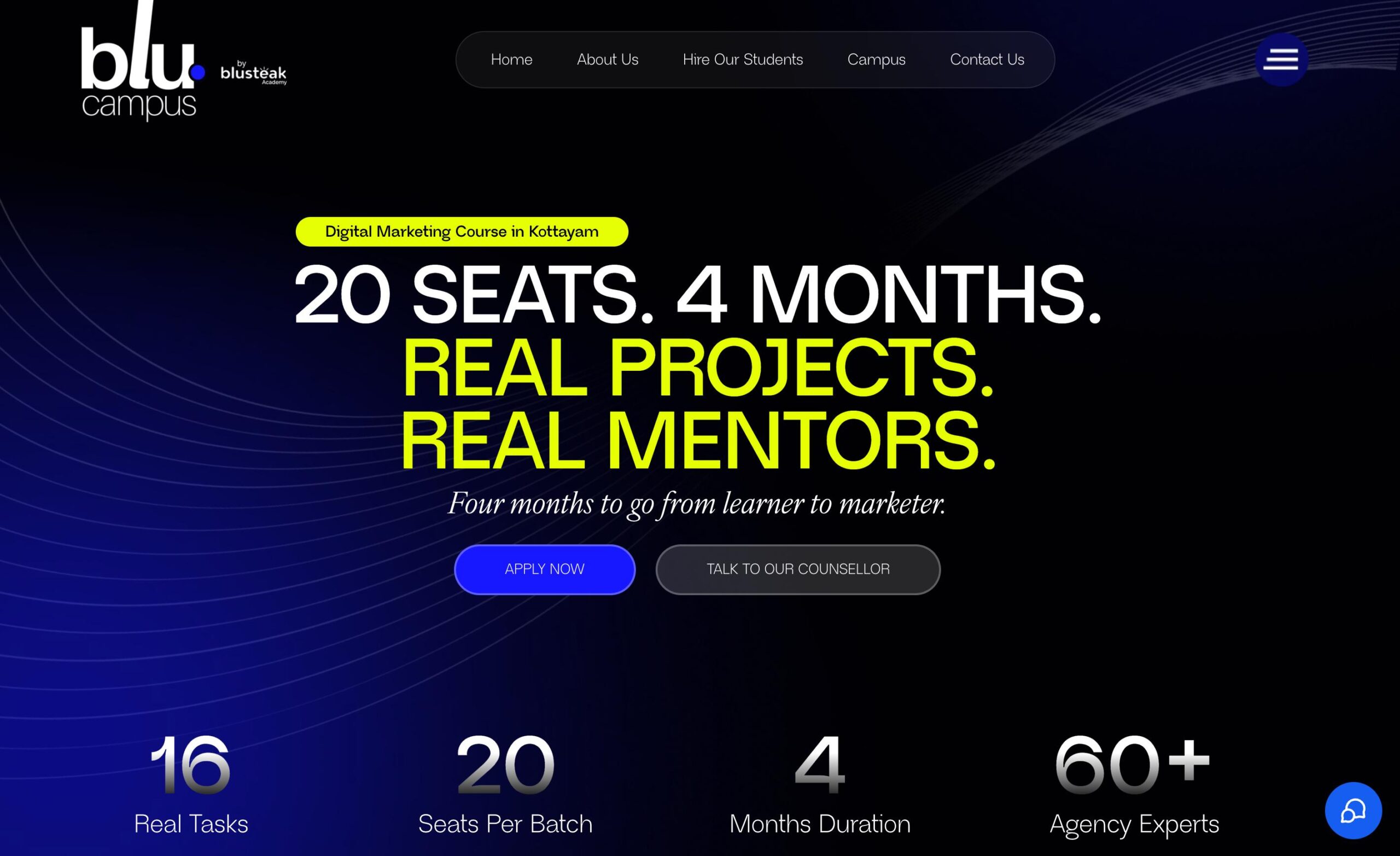
Once the positioning was clear, the website had to do more than look good. It had to sell the idea clearly.
Our thinking was simple: when a student lands on the website, they should get enough clarity to mentally decide whether this bootcamp is for them.
The homepage became the most important page. We redesigned it with a Gen Z-friendly look and structured it around the questions a student usually has.
Instead of forcing users to call us for every basic detail, the website gave them clarity first. By the time they reached out, they were already warmer than a normal inquiry.
- What will I learn?
- Who will train me?
- Is this practical or theory-based?
- Why only 20 seats?
- Will I get placement support?
- What kind of career can this lead to?
- Where is the bootcamp conducted?
- How much does it cost?
4. Optimising Instagram Like a Second Website
A key behaviour insight was that many students were not checking the website first. They were checkin Instagram.
So we stopped treating Instagram as only a content distribution channel and started treating it like a second website.
The pinned post strategy was built to communicate the same core positioning: focused learning, only 20 seats, practical training, real mentors, and student outcomes.
We also updated the Instagram bio. Instead of making the website the primary destination, we pushed users directly to the AI agentic WhatsApp number. That reduced friction. A student could visit Instagram, feel convinced, and start a WhatsApp conversation immediately.
This helped turn Instagram from a passive profile into a conversion surface.
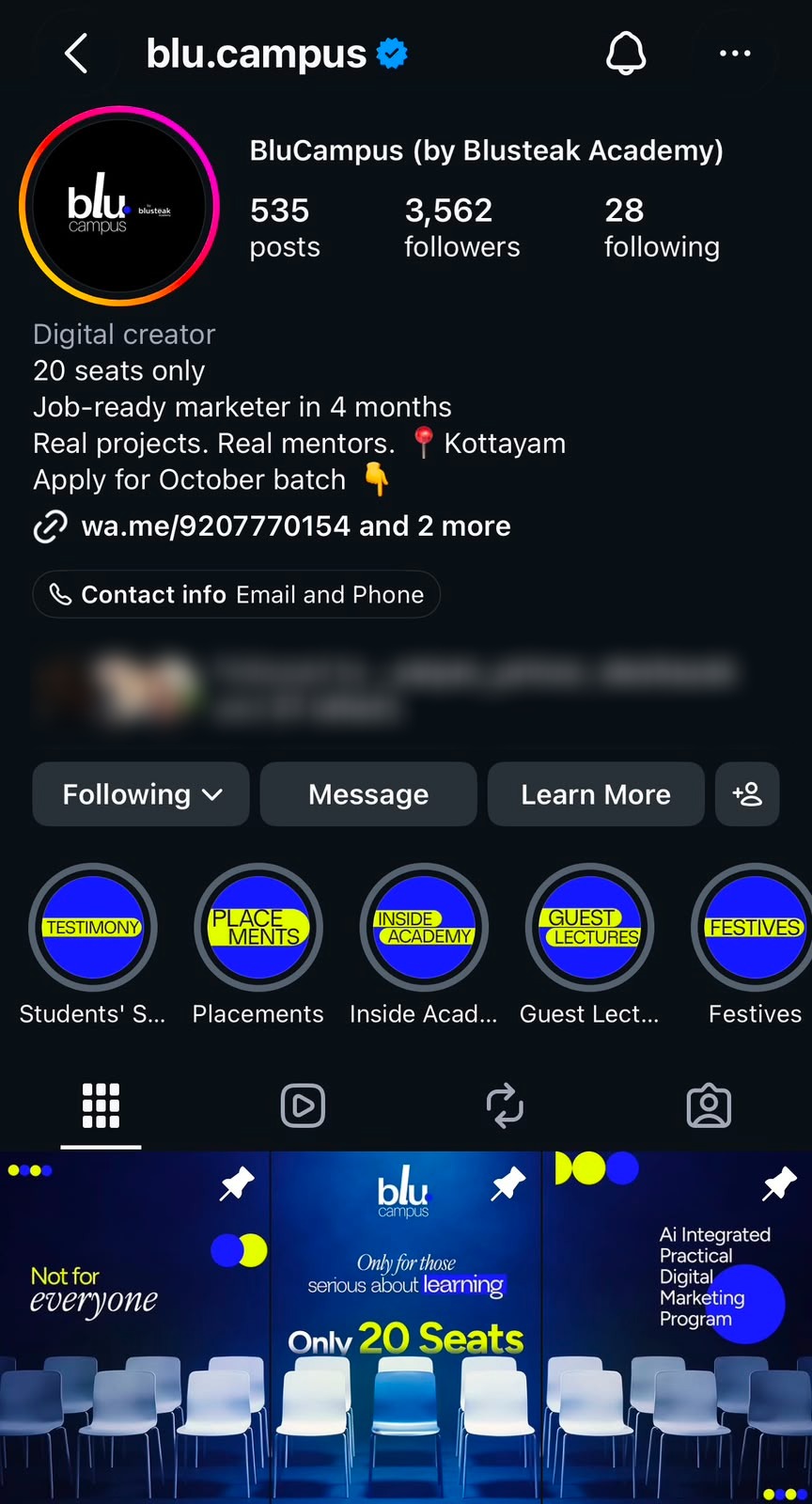
Blucampus Instagram page with pinned post
5. Building Organic Conversion with Mentor Podcasts and Testimonials
We also needed students to believe that Blucampus was not taught by generic trainers.
Many academies promote dedicated mentors or full-time trainers. Our advantage was different: our mentors were practitioners working inside Blusteak. They were doing the work, not just teaching the theory.
To make this visible, we introduced a mini mentor podcast series. We interviewed mentors from the agency so that prospective students could see the real people who would teach them.
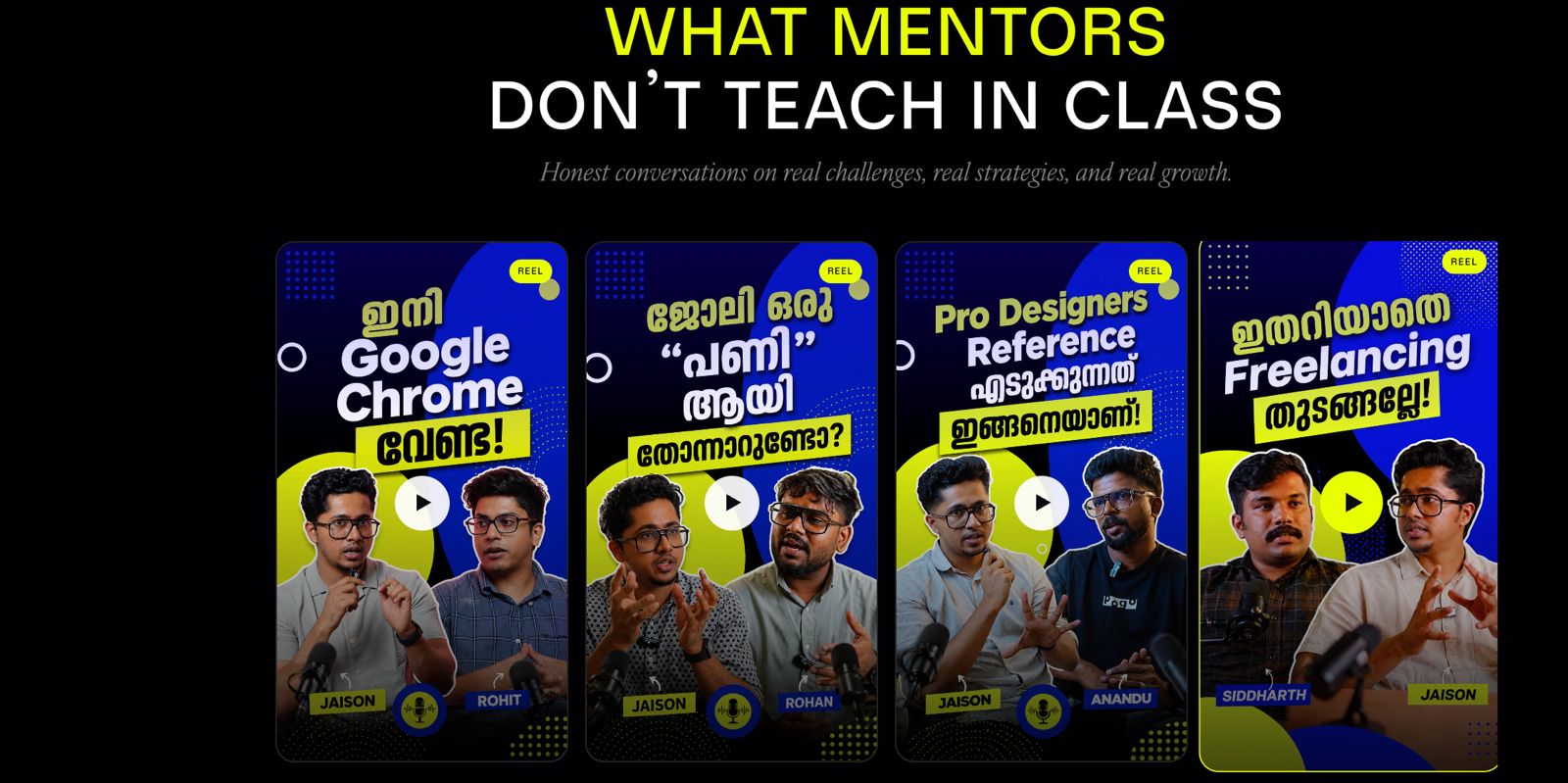
Mini mentor podcast playlist reels on Blucampus
This gave the Instagram profile more depth. A student in the consideration stage could see that the mentors were not abstract names on a brochure. They were real practitioners with active industry experience.
On top of that, we produced higher-quality testimonials from previous batches. Instead of simple phone-shot feedback videos, we focused on better backgrounds, storytelling, student journeys, and placement outcomes.
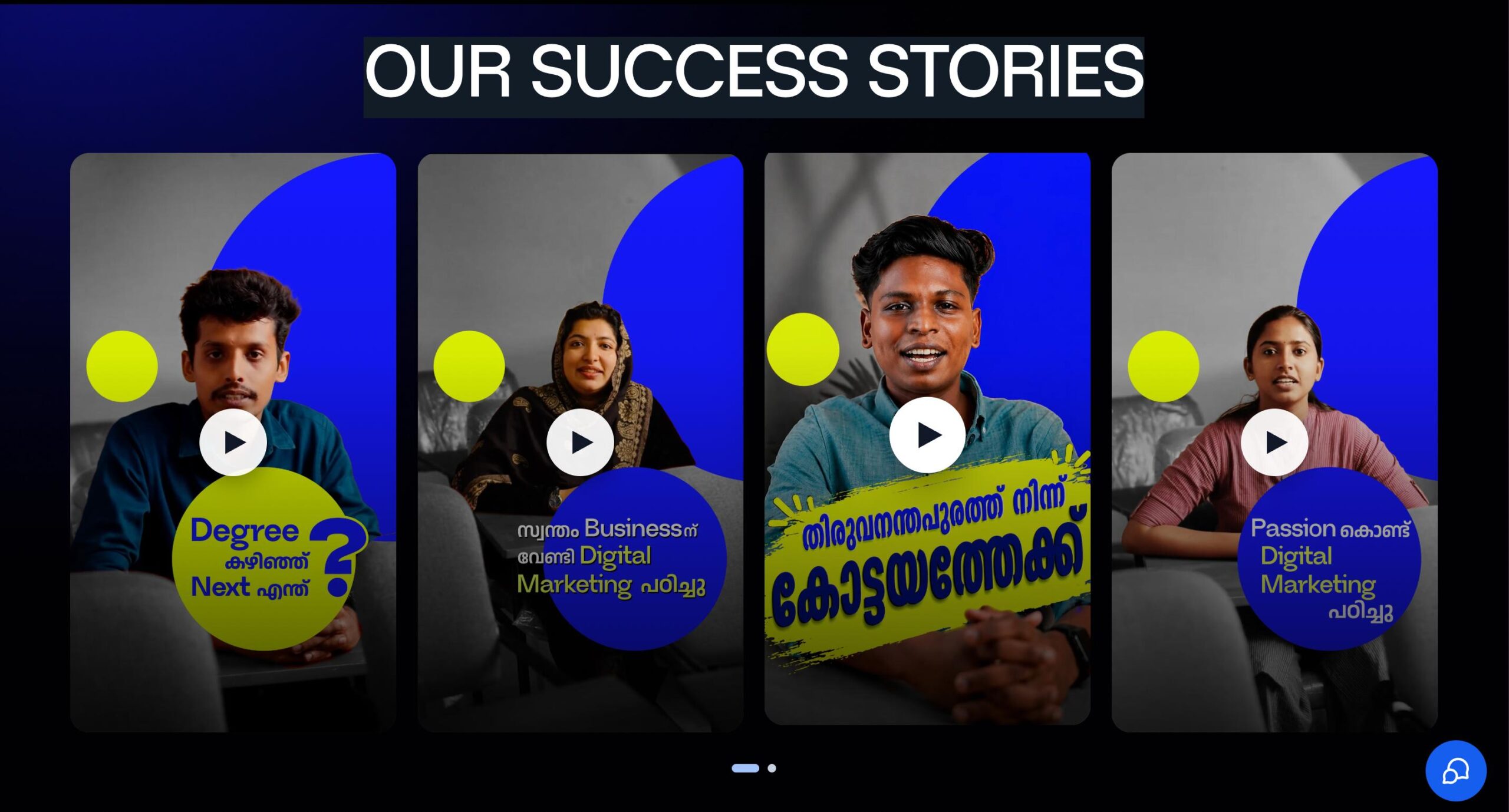
Testimonials of students on Blucampus
Together, the mentor podcasts and testimonials gave students two forms of proof: real mentors and real student outcomes.
6. Building an AI Agent for Instant Replies and Lead Qualification
One of the biggest operational insights came from analysing inquiry behaviour.
Many students were not reaching out during office hours. A lot of inquiries were coming after 6 PM, late at night, and even around 1 AM.
If we waited until the next working day to reply, the lead could lose interest or move to another institute. So we refined our AI agent to handle the first layer of communication instantly.
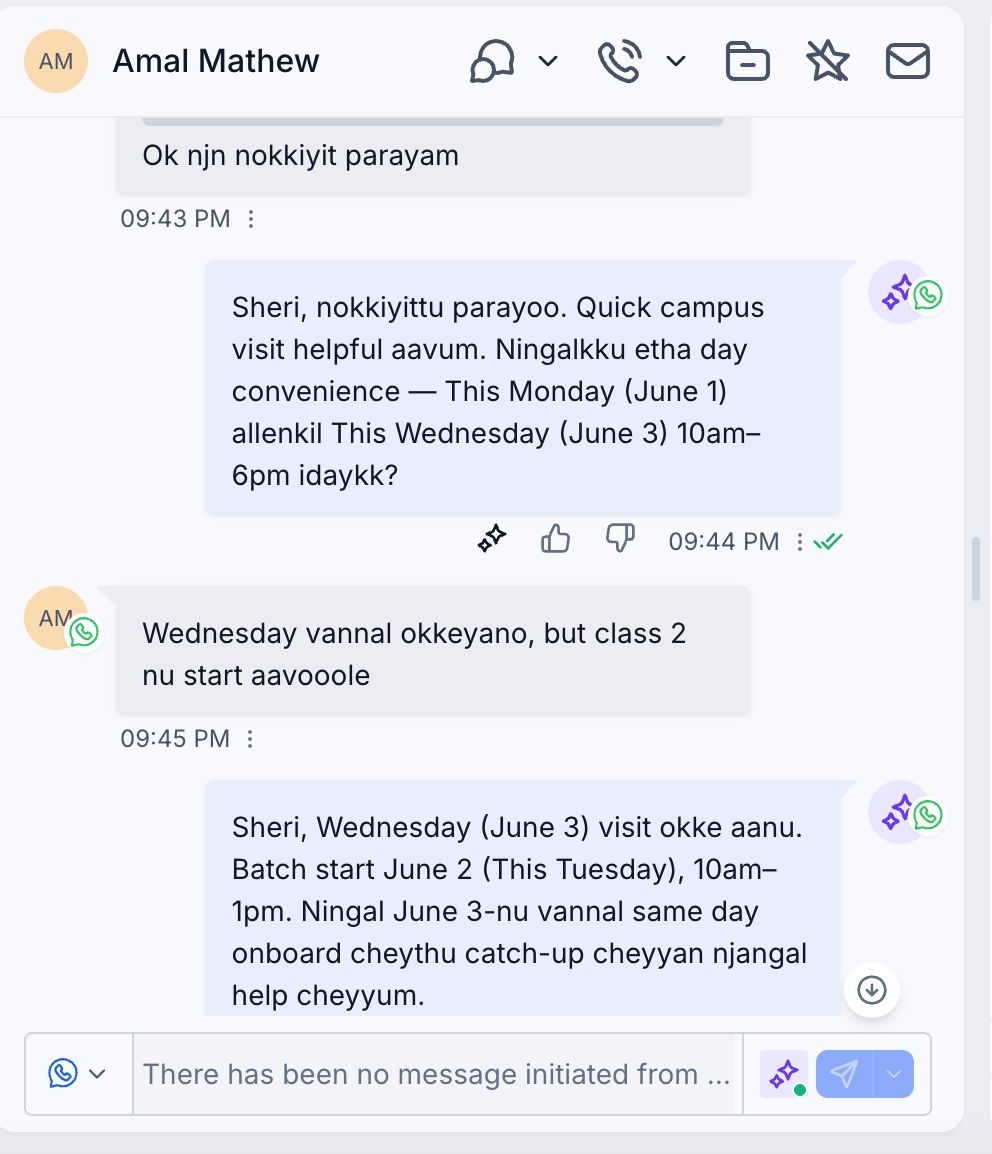
But the agent was not just answering questions. It was also qualifying leads. One of the most important qualification questions was whether the student was interested in coming offline to Kottayam to study performance marketing.
When a lead gave a positive response, the system automatically moved them to a warm lead stage. From there, the calling team could take over. The agent also handled follow-ups. If someone stopped replying, the agent followed up the next day on WhatsApp and restarted conversations in many cases.
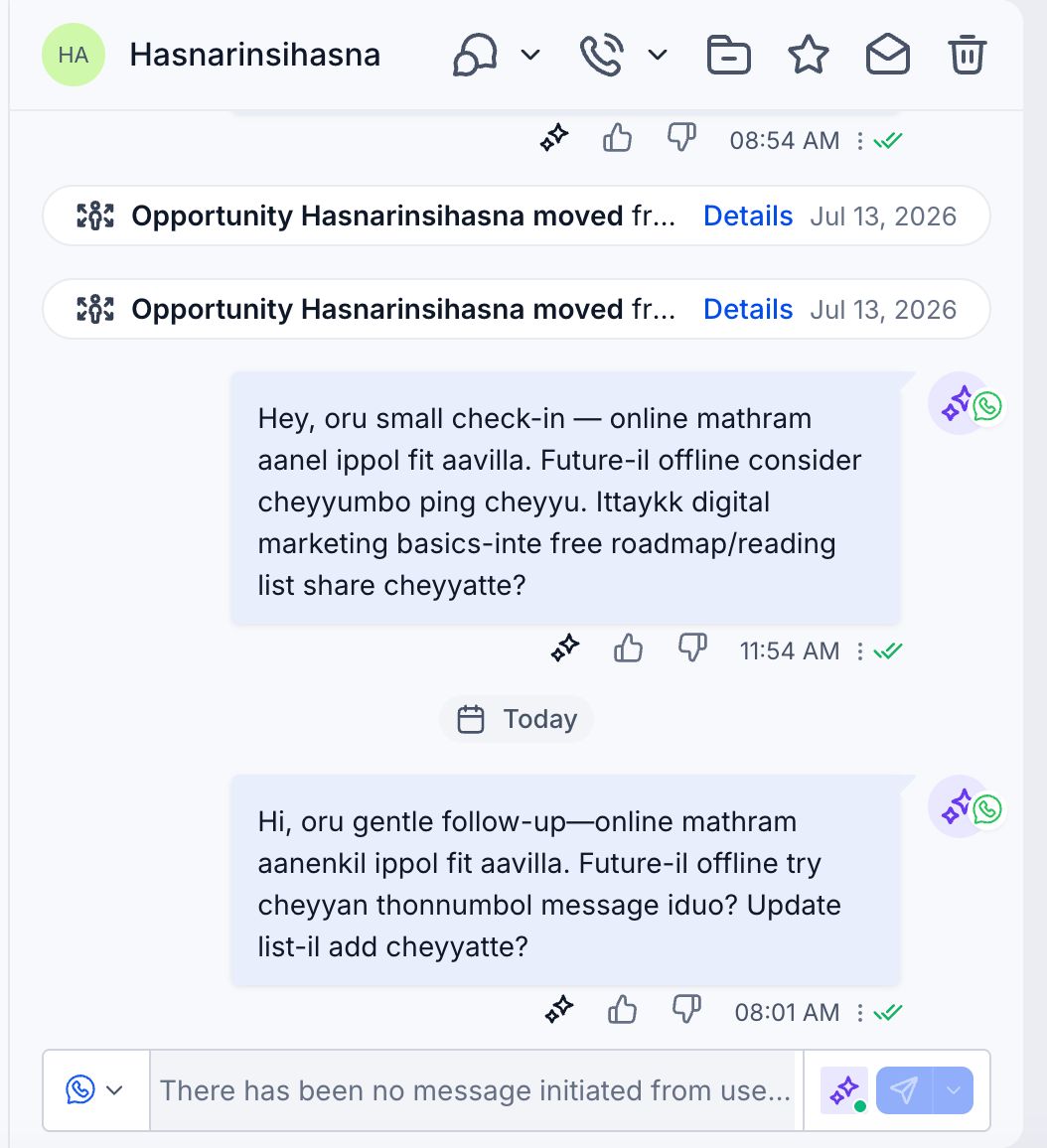
Over the campaign period, we generated 1026 leads.
7. Using Local Influencer Content to Build Trust
We also collaborated with a local influencer who had already cracked a strong format for organic reach.
Instead of making a direct ‘join this academy’ promotional video, we started with a local insight-led hook: asking people what salary is needed to live in Kottayam.
View this post on Instagram
That content worked because it did not feel like an ad. It felt like a real conversation around career, salary, and local aspirations.
We then used the same content in paid ads, which helped us reach the right local audience without attracting too many irrelevant leads.
The influencer also interviewed the founders and management team, which helped build credibility. This was much stronger than a normal influencer endorsement because students could see the people behind the bootcamp.
8. Capturing High-Intent Search Demand
While Meta and Instagram helped us generate awareness and conversations, we also focused on high-intent demand through search.
We improved visibility for important keywords like Digital marketing course Kottayam, digital marketing institute, Google Ads course, performance marketing course, and digital marketing certification course.
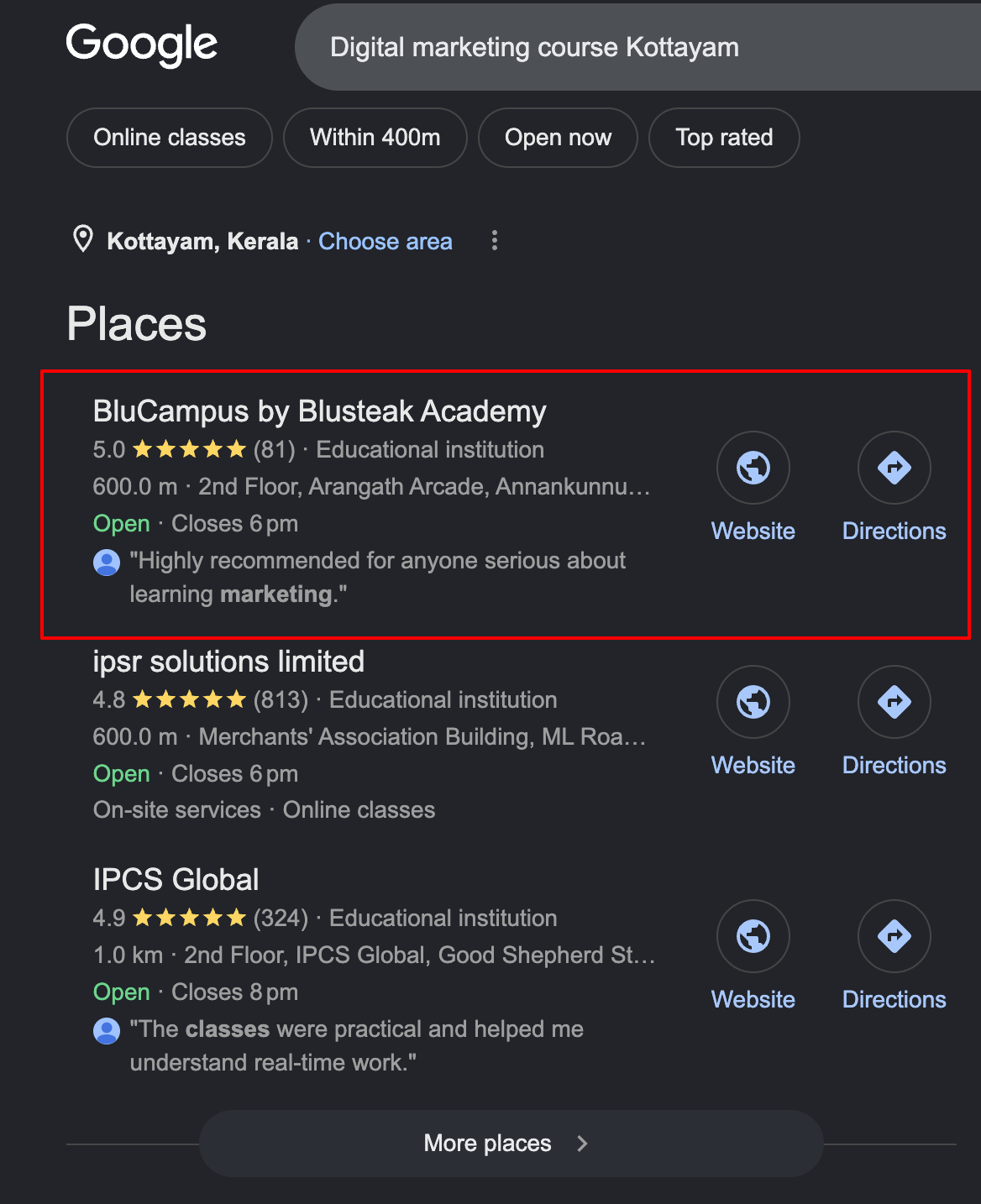
Along with SEO, we also ran Google Ads targeting people already searching for digital marketing and certification-related courses.
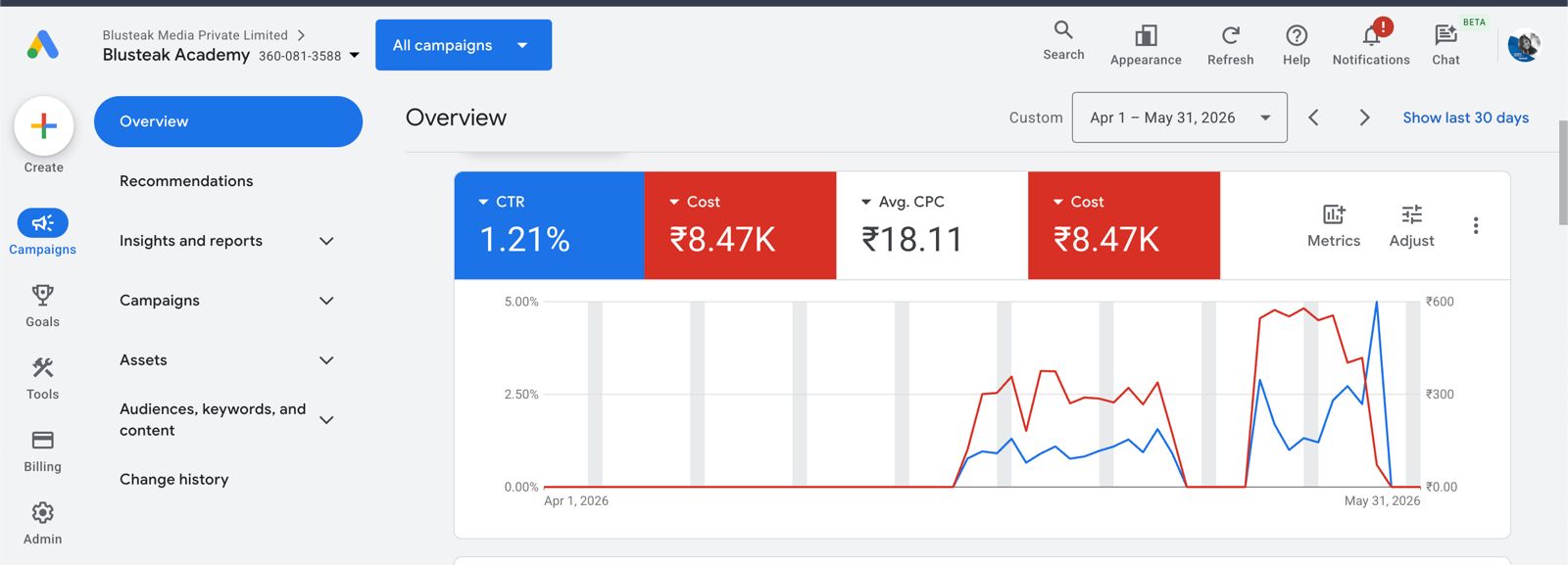 These were not casual browsers. These were people already looking for a course or institution. That gave us a different quality of leads compared to pure social media campaigns.
9. Combining Positioning, Instagram, AI and Performance Marketing
The biggest reason the campaign worked was not one single channel. It worked because every layer supported the same positioning.
The positioning gave us a clear wedge: agency-backed, 20-seat, focused learning. The rebrand made Blucampus look sharper and more relevant to Gen Z. The website explained the offer clearly. Instagram worked like a second website. The mentor podcasts and testimonials built trust. The AI agent replied instantly and qualified leads. The influencer content created local credibility. SEO and Google Ads captured existing intent. The calling team could then focus on warmer leads instead of chasing every inquiry manually.
This helped us move from just generating leads to building a proper admission journey.
The Result

Blucampus Batch 15
More importantly, the system showed us that admissions do not come only from running ads. For education brands, the full journey matters.
A student needs trust, clarity, quick responses, proof, and repeated follow-ups before making a decision. That is what we built.

Blucampus Classroom Batch 15
Key Outcomes
- 17 admissions in one batch
- 1026 total leads generated
- 50,000 organic reach from local influencer content
- 8 admissions strongly influenced by the AI agent
- Nearly 47% of admissions influenced by the AI agent journey
- Sharper positioning: Blusteak-backed, 20-seat, focused performance marketing bootcamp
- Instagram converted into a second website with pinned posts and WhatsApp-first CTA
- Mentor podcasts used to prove that students learn from real agency practitioners
- Higher-quality testimonials used to build trust in the consideration stage
- AI-led lead qualification and WhatsApp follow-ups
- Improved search visibility for high-intent course keywords
- A sharper Gen Z-focused brand identity
- A conversion-focused website experience